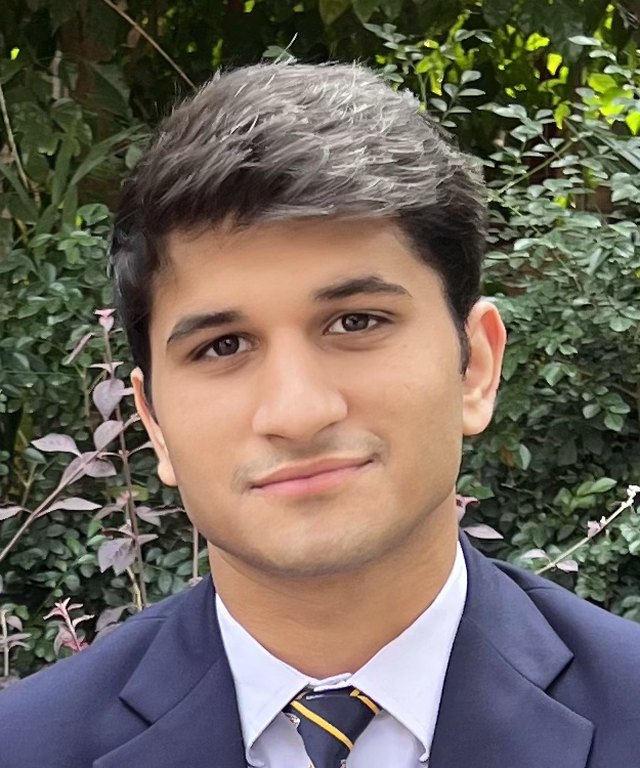
Muhammad Ahsan Sheikh

Waterloo, OntarioAvailable Jan–Apr 2027

Muhammad
Ahsan Sheikh

I learn how the work actually gets done,
then build what's missing.

Honours Mathematics and Business Administration at the University of Waterloo. Valuation models at KPMG, media campaigns at a WPP/GroupM agency, and the tools that measure them.

Muhammad Ahsan Sheikh
KPMGDeal Advisory · 2026
KineticWPP/GroupM · 1 of 2 interns
CAD 19.5MCapital in venture valued
CAD 1M+Media spend reconciled

From paid work. Project figures appear with the project.

01

OOH Campaign Performance Analyzer

Reconciling media spend inside a WPP/GroupM agency only ever found under-delivering sites after the campaign had ended. This finds them while it is still running — and prices what the shortfall is worth.

The analyzer's overview: 97.9% delivery to plan, above a bar splitting 595 placements into on-track, completed shortfalls and live issues
The headline reads 97.9%. The line beneath it says what that average is hiding

10.5m impressions short under a campaign number reading −2.1%  ·  4 days to flag a fault, against 31 to reconciliation  ·  44 unit tests
Synthetic dataset, fixed seed · Python · SQL · SQLite · pytest

Saw

Five months at Kinetic, the WPP/GroupM out-of-home agency, one of two interns on the rotational programme. Part of the job was reconciling CAD 1m+ of media spend by hand, rebuilding Excel dashboards daily from tracking-team data.

Asked

Why does this only ever run at the end? Because the comparison it needs — delivered against contracted — only resolves once the booking is over. That is structural, not clerical, and structural problems can be built around.

Built

A placement-level analyzer that measures every site against the impressions contracted by today, separates what can still be fixed from what has to be reconciled, and prices both in media value. Python and SQL do the analysis; the browser only renders what the tests already cover.

Learned

Campaign averages hide more than they show. The book reads −2.1% while 10.5m impressions are short across 227 placements — 14% of the gap cancelled out on paper by other sites running ahead. One campaign reads −0.1% while 27 of its 70 placements are behind.
02

Smog-Eating Billboard

Lahore has 1,150+ advertising hoardings sitting in some of the worst air on earth. I modelled whether coating them with photocatalytic titanium dioxide would pay for itself — and found the argument that works is commercial, not environmental.

Daily Pakistan · October 2024

Smog-eating technology is need of the hour to combat pollution in Lahore

Coating Lahore's 1,150+ ad hoardings (air quality index 207) with photocatalytic titanium dioxide would remove pollutants equivalent to 292,800 trees over six hours — and the case for advertisers is commercial before environmental, since smog already forces a costlier cleaning cycle.

Read the article ↗

Saw

Lahore's air quality index hit 207 in January 2024. The city also has over a thousand large advertising surfaces sitting in direct sun — the exact condition photocatalytic coatings need.

Asked

Would retrofitting them actually move air quality enough to justify the cost, and who would have to pay for it?

Built

A feasibility model estimating pollutant removal across 1,150+ hoardings — equivalent to 292,800 trees over six hours — plus a supply-side check that found the binding constraint: titanium dioxide is not produced in Pakistan.

Learned

The environmental argument does not move a media owner. The cleaning-cycle argument does: smog discolours conventional billboard skins faster, so the replacement cycle already costs more than the coating would. Reframing the case on cost is what made it publishable.

Feasibility modellingCost-Benefit AnalysisTechnical Writing
03

BarakahLink

Food-surplus redistribution depends on being local, and the people who most need it are the least likely to have an app and reliable data. Built around SMS access and a food map instead.

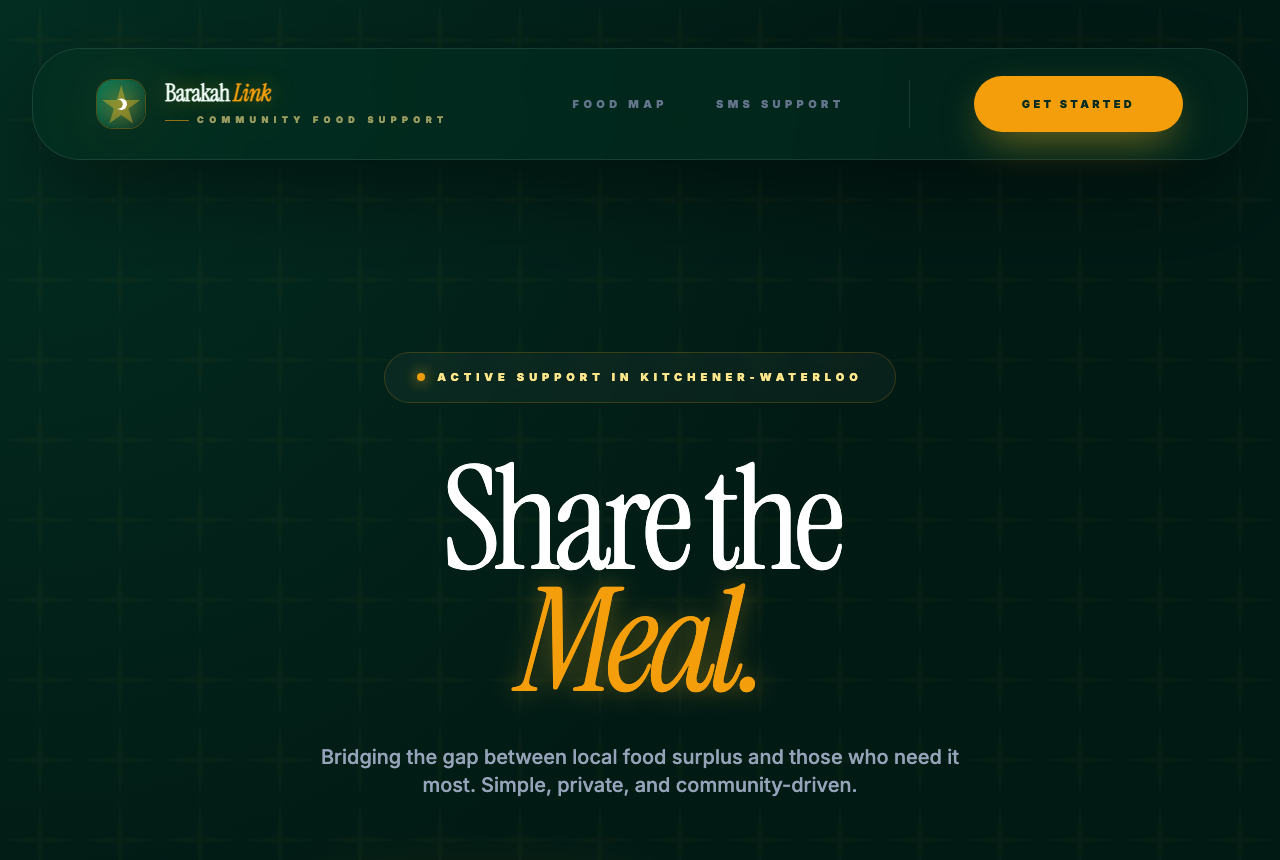
BarakahLink: a community food-support platform for Kitchener-Waterloo, with a food map and SMS support in the navigation
barakahlink.vercel.app — live, serving Kitchener–Waterloo

Saw

Local food surplus and local food need rarely find each other, and the platforms that try to connect them assume a smartphone and a stable connection.

Asked

What does the product look like if connectivity is the binding constraint rather than an afterthought?

Built

  • SMS-style access through a simulated gateway, so the platform works without an app
  • Unstructured input handling — Google Gemini turns messy free-text offers into organised listings and need summaries, written to preserve the dignity of the person asking
  • Hyper-local matching so surplus surfaces to people close enough to actually collect it

Learned

Designing for SMS first changed what the product could be, not just how it looked. The constraint turned out to be the brief.

TypeScriptGoogle Gemini APIPythonLeaflet
04

Where I've worked

KPMGApr – Jul 2026

Business Advisory Intern, Deal Advisory. Valuation and three-statement modelling, including an independent valuation supporting a stake transfer between joint-venture partners.

KineticSep 2024 – Jan 2025

Business Analyst Intern on the rotational programme at the WPP/GroupM out-of-home agency. Five departments, CAD 1m+ of media spend tracked and reconciled.

University of WaterlooSep 2025 – present

Honours Mathematics and Business Administration (Co-op). President's Scholarship, Term Distinction.

Looking for my next role in consulting, analytics or marketing.